
Artificial flowers are imitations of natural flowering plants used for commercial or residential decoration. Modern techniques involve carved or formed soap, nylon netting stretched over wire frames, ground clay, and mass-produced injection plastic mouldings.
1. Polyester and Paper
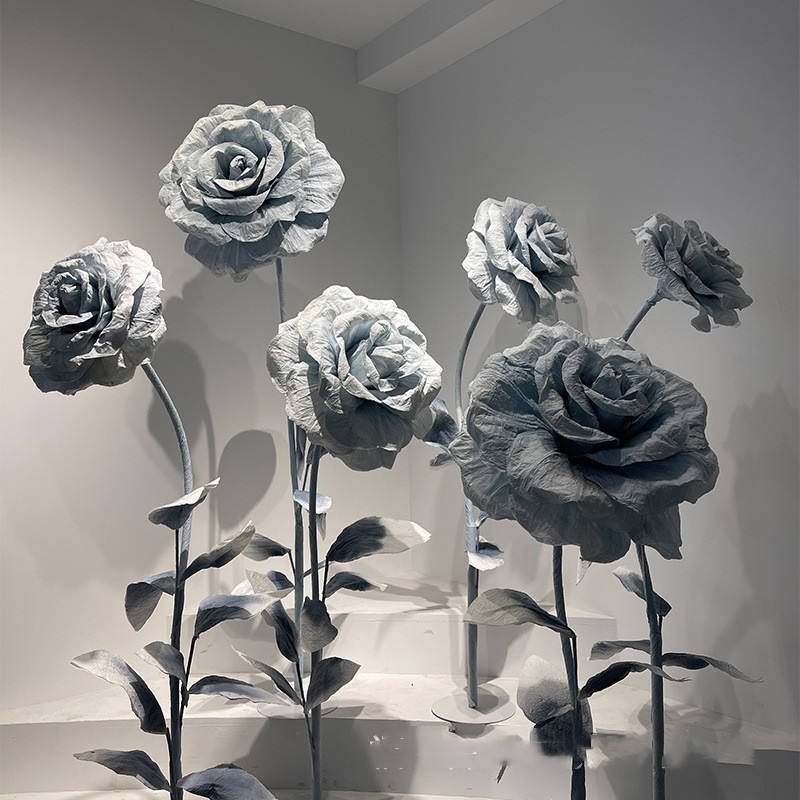
Five main processes may be distinguished:
- The first step consists of putting the polyester fabric in gelatine in order to stiffen it.
- The second consists of cutting up the various polyester fabrics and materials employed into shapes suitable for forming the leaves, petals, etc.; this may be done with scissors, but is more often done with stamps that can cut through a dozen or more thicknesses at one blow.
- Next, the veins of the leaves are impressed by means of silk screen printing with a dye, and the petals are given their natural rounded forms by goffering irons of various shapes.
The next step is to assemble the petals and other parts of the flower, which is built up from the center outwards.
2. Silk Flowers
Silk flowers are crafted from a protein fiber spun by the silk worm, producing lifelike flowers. Flowers described as being made of silk with a “real touch technique” are not made of silk, but rather are made of polyester, polymers and plastics.
3.Soap
There are two methods:
Carved: A bar with layered colored soap is mounted in a lathe, and circular grooves are chiseled into it. The finished flower is symmetric and regular, but the flowers are not identical and can be called handmade.
Molded: An oil-less soap milled to a powder is mixed with water, and the paste is used as a modelling material. Leaf and petal textures are stamped or rolled onto the soap. This is an expensive, labour-intensive process.


