
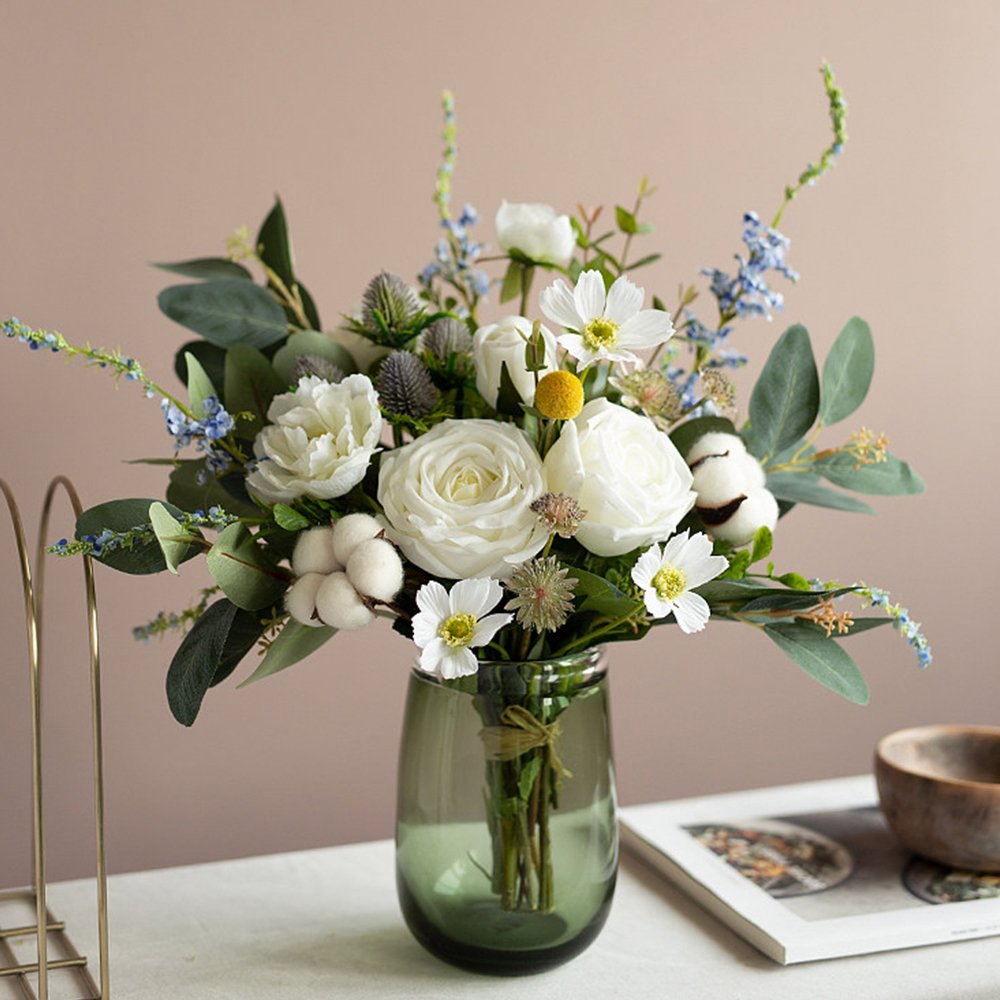
Silk and other artificial flowers manufactured today are breathtakingly real and must be touched if they are to be distinguished from nature’s own. Silk trees bring the outdoors into sterile offices, and flower arrangements change the color and feel of a room for a relatively small investment. Hobbyists find them a joy to work with and take pleasure in completing arrangements that make beautiful, lasting gifts and ornaments.
Faux flowers allow home decorators to defy the seasons, not only by having summer blooms in the dead of winter but by mixing flowers from several seasons in a single display. Some manufacturers use real materials to enhance silk flowers, such as inserting artificial branches in real tree trunks. Real touches are also added to the false flora; leaves may have holes that look like insect damage, silk roses are complete to the thorns, and some fabulous fakes are even fragrant. Their ultimate attraction may be their least natural aspects; these plants don’t need water, fertilizer, sunlight, or tender care.
History
Florists call silk and other artificial flowers “permanent botanicals,” and for many years, they looked down on both dried flowers and artificial flowers as inferior. Today, silk flowers are prized for their versatility and are used by florists to enhance live plants and mingle with cut blossoms. This tradition is hundreds of years old and is believed to have been started by the Chinese who mastered the skills of working with silk as well as creating elaborate floral replicas.
Raw Materials
Artificial flowers are made in a wide variety of materials depending on the market the manufacturer is reaching. In quantity, polyester has become the fabric of choice by flower makers and purchasers because of its lower cost, the ability of the fabric to accept dyes and glues, and its durability. Plastic is also the material used most often for the stems, berries, and other parts of flowers for the market that includes picks—small clusters of artificial flowers on short plastic and wire stems that can be inserted into forms to make quick, inexpensive floral decorations—and bulk sales of long stems of flowers that are also less expensive. Artificial flowers are made of paper, cotton, parchment, latex, rubber, sateen (for large, bold-colored flowers and arrangements), and dried materials, including flowers and plant parts, berries, feathers and fruits.
For more upscale silk flowers, silk, rayon, and cotton are the fibers of choice. Wire in a wide range of gauges or diameters is used for firmness in creating the stems (and in stiffening some flower petals and parts), but the wire is wrapped with specially dyed, tear-resistant, durable paper. No plastic is used. Other natural materials such as dried flowers, feathers, and berries are also significant in the upper-end market.


